Modern organizations rely on data pipelines that do more than move records from one system to another. They need pipelines that validate, measure, summarize, and explain data so that operational teams and analysts can trust what they see. CloverDX supports this kind of work by combining data integration, data quality controls, analytical transformations, and reporting-ready outputs within repeatable workflows.
TLDR: CloverDX provides practical statistical analysis capabilities by helping teams profile data, calculate metrics, validate quality, and prepare analytics-ready datasets. Its strength is not only in computation, but also in making statistical checks repeatable across automated data pipelines. Organizations can use it to detect anomalies, monitor quality trends, aggregate business measures, and deliver clean data to dashboards, reports, and downstream systems. It is especially useful when statistical analysis must be embedded directly into production data operations.
- How CloverDX Supports Statistical Analysis
- Data Quality as the Foundation of Analytics
- Profiling and Understanding Data
- Statistical Transformations and Aggregations
- Analytics-Ready Data Preparation
- Anomaly Detection and Threshold Monitoring
- Metadata, Lineage, and Governance
- Reporting and Delivery of Statistical Results
- Automation and Scheduling
- Business Benefits of CloverDX Statistical Capabilities
- Conclusion
- FAQ
How CloverDX Supports Statistical Analysis
CloverDX is primarily known as a data integration and transformation platform, but its capabilities extend naturally into statistical analysis because statistics often begin with structured, reliable, and well-prepared data. Before an analyst can interpret trends or calculate meaningful indicators, the underlying data must be standardized, validated, enriched, and consolidated. CloverDX provides the components and workflow logic needed to perform these steps at scale.
Within a CloverDX graph or jobflow, data can be read from databases, flat files, APIs, cloud storage, applications, and enterprise systems. Once ingested, it can be inspected, filtered, joined, sorted, normalized, aggregated, and written to reporting platforms or analytical repositories. This makes CloverDX valuable for organizations that want statistical processing to occur as part of a governed pipeline rather than as a one-time manual script.
Statistical analysis in CloverDX is often practical and operational. It may involve calculating counts, averages, medians, distributions, standard deviations, ratios, minimum and maximum values, missing-value rates, duplicate percentages, or threshold violations. These outputs can be used to inform business reports, trigger alerts, or support deeper analytics in external tools.
Data Quality as the Foundation of Analytics
No statistical analysis is stronger than the quality of the data behind it. CloverDX offers a structured environment for building data quality rules into integration pipelines. These rules can verify whether records are complete, valid, consistent, and conformant to business expectations.
Common data quality checks implemented in CloverDX include:
- Completeness checks: identifying null, blank, or missing values in required fields.
- Format validation: confirming that dates, email addresses, phone numbers, identifiers, and codes match expected patterns.
- Range checks: ensuring numeric values fall within acceptable minimum and maximum boundaries.
- Reference validation: comparing records against lookup tables, master data, or approved lists.
- Duplicate detection: identifying repeated entities, transactions, or records based on configurable matching rules.
- Consistency checks: verifying relationships between fields, such as order dates occurring before shipment dates.
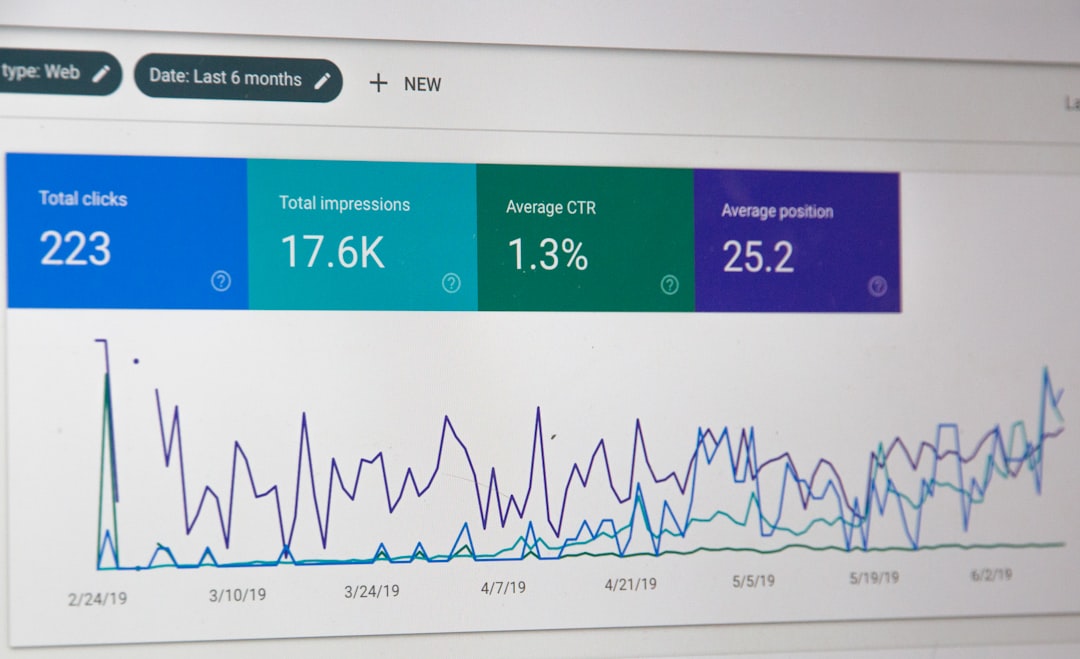
These checks are statistically useful because they produce measurable quality indicators. For example, a pipeline can calculate the percentage of invalid customer records by region, the number of duplicate transactions per file, or the rate of missing product attributes by supplier. Over time, these measures become trendable quality statistics that reveal whether data governance efforts are improving or declining.
Profiling and Understanding Data
Data profiling is one of the most important early steps in statistical analysis. CloverDX can assist teams in inspecting datasets to understand their structure, content, and reliability. While the exact implementation may depend on the components and design patterns used by the organization, CloverDX pipelines can be configured to calculate descriptive statistics and generate summaries that help analysts understand the data before it is used.
Typical profiling outputs may include:
- Record counts by source, file, table, or processing batch.
- Counts of distinct values for categorical fields.
- Minimum, maximum, average, and total values for numeric fields.
- Frequency distributions for codes, categories, regions, statuses, or product groups.
- Missing-value rates for required and optional attributes.
- Outlier indicators based on configured thresholds or statistical rules.
These measures help organizations identify data patterns that might otherwise remain hidden. For example, a sudden rise in rejected records may indicate a formatting change in a source system. A shift in sales distribution by channel may reveal a business trend. A spike in null values may point to an upstream application issue. CloverDX enables such observations to be generated automatically and repeatedly, which is essential for production analytics environments.
Statistical Transformations and Aggregations
CloverDX supports a wide range of transformation logic that can be used to prepare statistical outputs. Data can be grouped, sorted, calculated, enriched, and reshaped to support analytical needs. Aggregation is especially important because many business statistics are calculated by summarizing detailed records into meaningful measures.
For example, CloverDX can help calculate:
- Sales totals by month, product category, customer segment, or territory.
- Average transaction values by channel or region.
- Error rates by source system or data provider.
- Churn indicators based on customer activity history.
- Inventory turnover metrics using product movement records.
- Service-level statistics from timestamps and event logs.
These calculations can be embedded in repeatable workflows that run daily, hourly, weekly, or whenever new data arrives. This makes CloverDX suitable for operational analytics, where statistical measures must be refreshed consistently and delivered to downstream consumers without manual intervention.
For more advanced statistical needs, CloverDX can also participate in broader analytical architectures. It can prepare data for databases, data warehouses, data lakes, business intelligence tools, or specialized statistical environments. This allows organizations to use CloverDX for the heavy lifting of data preparation while relying on dedicated analytics platforms for modeling, visualization, or machine learning when needed.

Analytics-Ready Data Preparation
One of the platform’s strongest contributions to analytics is the creation of clean, structured, and consistent datasets. Statistical work often suffers when analysts must spend excessive time correcting field formats, reconciling identifiers, or combining incompatible sources. CloverDX can automate these preparation tasks so that analytical teams receive data that is already standardized.
Analytics-ready preparation may include:
- Extracting data from multiple operational systems.
- Standardizing fields such as dates, currencies, names, and addresses.
- Applying business rules to classify, segment, or score records.
- Joining datasets from customer, product, transaction, and reference sources.
- Calculating derived metrics such as margins, conversion rates, and aging buckets.
- Writing curated outputs to reporting databases, analytics tables, or files.
This process reduces friction between data engineering and analytics teams. It also improves consistency because the same transformation logic can be reused in different workflows. Instead of multiple departments calculating a metric differently, CloverDX can centralize the rule and apply it reliably.
Anomaly Detection and Threshold Monitoring
CloverDX can be used to implement practical anomaly detection methods within data pipelines. While it is not positioned solely as an advanced statistical modeling tool, it can identify unusual values and patterns through rule-based or calculation-based logic. This is often sufficient for operational monitoring, where teams need to know when data falls outside expected limits.
Examples of anomaly and threshold monitoring include:
- Flagging transactions above unusually high amounts.
- Detecting files with record counts significantly below expected volume.
- Identifying daily revenue totals that deviate from historical ranges.
- Marking products with negative inventory balances.
- Alerting when missing-value rates exceed a defined tolerance.
- Capturing records with impossible date sequences or invalid combinations.
These checks can support both data quality management and business monitoring. For instance, if a supplier sends a file with only half the normal number of records, CloverDX can detect the issue before downstream reports are affected. If a customer dataset shows an unexpected rise in incomplete addresses, the organization can investigate the source system before marketing campaigns are impacted.
Metadata, Lineage, and Governance
Statistical outputs are more trustworthy when users understand where the data came from and how it was processed. CloverDX supports governed data workflows by making transformations visible and repeatable. Job designs can show how fields are mapped, how calculations are performed, and where outputs are delivered.
This matters because statistical metrics often become decision-making assets. A revenue figure, defect rate, or customer count must be explainable. If a manager questions a number in a report, the organization needs to trace it back to its sources and transformation rules. CloverDX helps by providing a controlled environment where data logic can be documented, versioned, executed, and monitored.
Governance is also closely connected to reproducibility. A statistic calculated manually in a spreadsheet may be difficult to recreate. A statistic calculated in an automated CloverDX workflow can be regenerated using the same logic whenever the pipeline runs. This improves confidence in recurring reports and regulatory or compliance reporting processes.
Reporting and Delivery of Statistical Results
After data has been validated and analyzed, CloverDX can deliver results to the systems that business users rely on. It can write outputs to relational databases, flat files, cloud platforms, enterprise applications, or reporting repositories. This flexibility allows statistical results to become part of dashboards, scheduled reports, exception files, or operational alerts.
Reporting use cases may include:
- Data quality scorecards showing error rates, rejection counts, and completeness trends.
- Operational reports summarizing processing volumes, failed records, and source performance.
- Financial summaries calculating totals, averages, and variance indicators.
- Customer analytics extracts prepared for segmentation and campaign reporting.
- Compliance reports documenting processed records and validation outcomes.
CloverDX can also support exception reporting, where only records that fail specific statistical or quality rules are sent to a review process. This helps data stewards focus on the most important issues rather than manually scanning entire datasets.
Automation and Scheduling
A major advantage of CloverDX is that statistical checks and analytical transformations can be automated. Once a workflow has been designed, it can be scheduled, parameterized, monitored, and integrated into larger enterprise processes. This capability is essential for organizations that need recurring analytics rather than one-off analysis.
Automated statistical workflows can run on a defined schedule, respond to file arrivals, or be triggered by other systems. They can generate logs, capture processing metrics, and route bad records to error handling paths. This creates a reliable operating model for analytics, where data is not only processed but also measured, validated, and controlled every time it moves.
Business Benefits of CloverDX Statistical Capabilities
The value of CloverDX in statistical analysis comes from its ability to combine technical processing with operational reliability. It helps organizations move from reactive data correction to proactive data measurement. Instead of discovering quality problems after reports are published, teams can catch them during ingestion and transformation.
Key benefits include:
- Improved trust in reports through consistent validation and metric calculation.
- Reduced manual effort by automating profiling, cleansing, aggregation, and delivery.
- Faster analytics cycles because analysts receive prepared and standardized datasets.
- Better data governance through repeatable workflows and visible transformation logic.
- Earlier issue detection using thresholds, anomaly checks, and exception routing.
- Scalable reporting operations for recurring business, compliance, and quality reports.
Conclusion
CloverDX provides a strong foundation for statistical analysis when the goal is to integrate, validate, summarize, and deliver reliable data. Its capabilities are especially valuable in environments where data quality and analytics must be part of automated production workflows. By combining profiling, rule-based validation, aggregation, monitoring, and reporting delivery, CloverDX helps organizations turn raw data into trustworthy statistical insight.
Rather than replacing every specialized statistical or visualization tool, CloverDX often works best as the engine that prepares and governs the data those tools depend on. It ensures that data is consistent, measurable, and ready for interpretation. For organizations that need dependable analytics pipelines, CloverDX can play a central role in making statistical analysis repeatable, auditable, and operationally useful.
FAQ
What statistical analysis capabilities does CloverDX provide?
CloverDX can support descriptive statistics, aggregations, profiling, data quality metrics, threshold checks, exception reporting, and analytics-ready data preparation. It is commonly used to calculate counts, totals, averages, distributions, error rates, and completeness measures within automated data pipelines.
Is CloverDX a business intelligence tool?
CloverDX is primarily a data integration and transformation platform, not a traditional business intelligence visualization tool. However, it prepares and delivers high-quality data that can be used by BI platforms, dashboards, reports, and analytical systems.
Can CloverDX help improve data quality?
Yes. CloverDX can validate formats, check required fields, detect duplicates, compare values against reference data, identify invalid records, and calculate data quality statistics. These capabilities help organizations monitor and improve the reliability of their data.
Can CloverDX detect anomalies?
CloverDX can detect anomalies through configured rules, thresholds, comparisons, and statistical calculations. For example, it can flag unusual record volumes, extreme transaction values, high error rates, or unexpected missing-value patterns.
How does CloverDX support reporting?
CloverDX can generate reporting-ready datasets and deliver them to databases, files, applications, or analytics platforms. It can also create exception outputs, quality scorecards, and summarized metrics used in operational and management reporting.
Who benefits most from CloverDX statistical workflows?
Data engineering teams, analytics teams, data stewards, compliance teams, and operations managers can benefit from CloverDX statistical workflows. It is especially useful for organizations that need repeatable, governed, and automated data quality and analytics processes.



Leave a Reply