Throughout history, humanity has steadily pushed back the boundaries of ignorance. We have mapped the human genome, walked on the Moon, and peered billions of light-years into deep space. Yet for all this progress, there remain phenomena that stubbornly resist explanation. Among the most perplexing of these is dark matter—a mysterious substance that appears to make up the majority of the universe’s mass, yet cannot be directly observed. Its existence is inferred through gravitational effects, but its true nature remains one of the most profound unanswered questions in modern science.
TLDR: Dark matter is an invisible substance believed to make up roughly 85% of all matter in the universe. Scientists cannot see or directly detect it, but they observe its gravitational effects on galaxies and cosmic structures. Despite decades of research, no one knows what dark matter is made of. Solving this puzzle could fundamentally reshape our understanding of physics and the universe.
The paradox of dark matter is both simple and staggering. On one hand, it appears to dominate the cosmos. On the other, it cannot be seen, touched, or directly measured. Scientists did not set out to discover dark matter; rather, they stumbled upon it when careful observations refused to match theoretical expectations. The discrepancy was so persistent and replicated across so many independent observations that it forced a radical conclusion: most of the matter in the universe is invisible.
The First Clues: Galaxies Behaving Badly
The story begins in the early 20th century. Astronomers studying the motion of galaxies within clusters found something deeply puzzling. According to Newtonian physics, galaxies should move at speeds determined by the visible mass within the cluster. Instead, they were moving far too quickly. Based solely on visible matter, many of these galaxies should have flown apart long ago.
In the 1930s, Swiss astronomer Fritz Zwicky proposed a bold explanation. He suggested that there must be some unseen “dark” matter providing additional gravitational pull. At the time, the idea seemed speculative. However, decades later, improved measurements of galaxy rotation curves reinforced his suspicion.
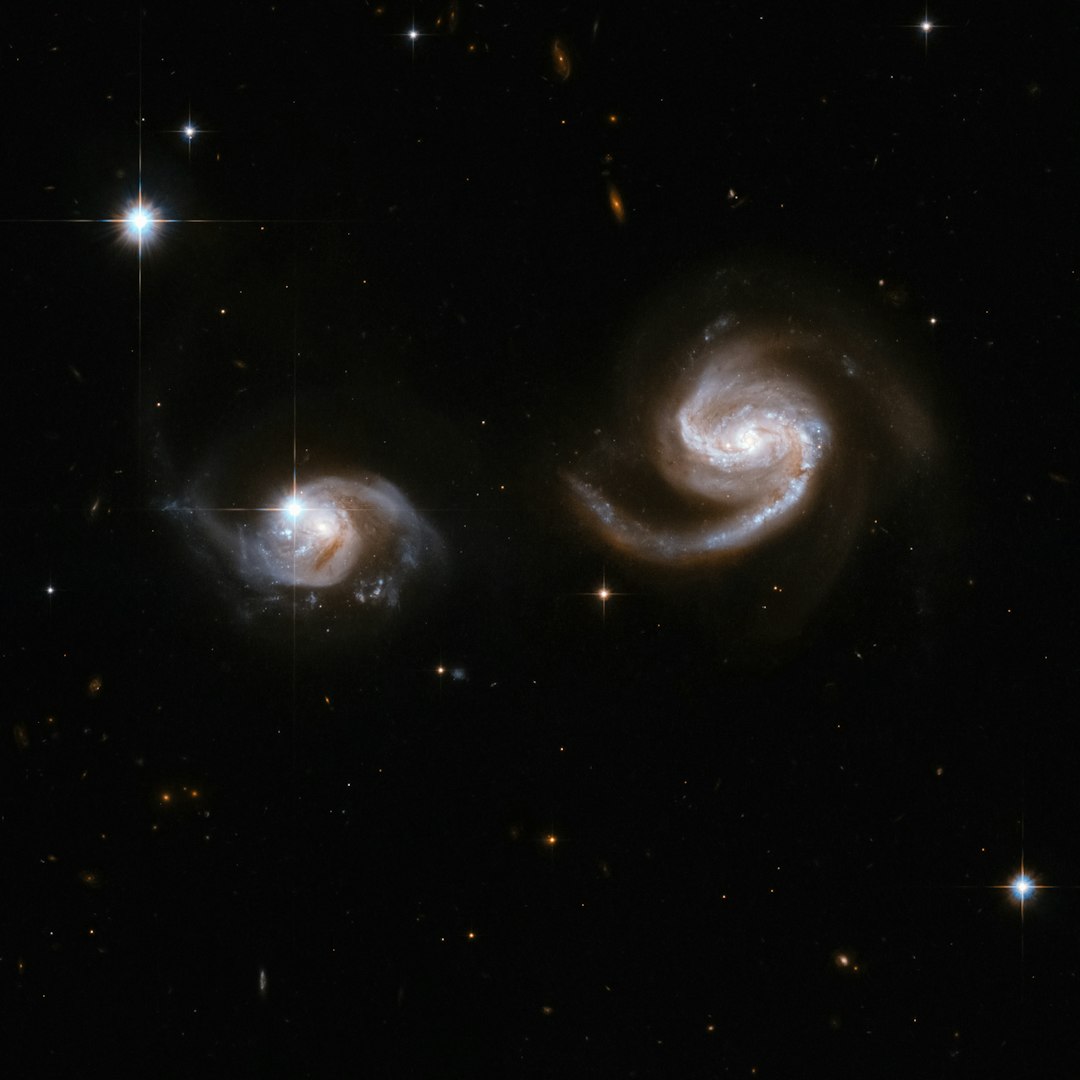
When astronomers measured how fast stars orbit around the centers of spiral galaxies, they expected outer stars to move more slowly than inner ones—much like planets in our solar system. Instead, stars at the edges were orbiting at nearly the same speeds as those closer in. This observation could only be explained if galaxies were embedded in vast halos of unseen mass.
What We Know About Dark Matter
Despite its invisibility, dark matter is not entirely mysterious. Scientists have been able to determine several key properties based on observation and experimentation. These include:
- It interacts gravitationally: Dark matter exerts gravitational force and influences the motion of galaxies and clusters.
- It does not emit or absorb light: It neither reflects, emits, nor blocks electromagnetic radiation in a detectable way.
- It does not interact strongly with normal matter: If it did, it would already have been detected in laboratories.
- It played a crucial role in cosmic formation: Without it, galaxies would not have formed in the structures we observe today.
Measurements of the cosmic microwave background—the faint afterglow of the Big Bang—have further confirmed that only about 5% of the universe consists of ordinary matter. Roughly 27% appears to be dark matter, while the remaining 68% is an even stranger entity known as dark energy.
This leads to an astonishing realization: everything we see—stars, planets, gas clouds, and even ourselves—represents only a small fraction of cosmic reality.
Leading Theories: What Could It Be?
Physicists have proposed several candidate particles and explanations. While none have been conclusively proven, a few ideas dominate the conversation:
- WIMPs (Weakly Interacting Massive Particles): These hypothetical particles would interact through gravity and possibly the weak nuclear force. For decades, they were the leading candidates.
- Axions: Extremely light and elusive particles originally proposed to solve a different physics problem. They could exist in enormous quantities.
- Massive Compact Halo Objects (MACHOs): These include black holes, neutron stars, or faint stars. However, surveys suggest they cannot account for all dark matter.
- Modified Gravity Theories: Some scientists propose that gravity itself behaves differently at cosmic scales, eliminating the need for dark matter altogether.
Massive underground detectors have been built to capture rare interactions between dark matter particles and ordinary matter. These experiments are shielded from cosmic rays and background radiation to minimize interference. So far, results have been inconclusive. Some experiments have hinted at signals, but none have been confirmed with enough certainty to declare discovery.
The Bullet Cluster: A Cosmic Smoking Gun
One of the most compelling pieces of evidence for dark matter comes from observations of colliding galaxy clusters. In particular, the so-called Bullet Cluster has become an icon in cosmology.
When two clusters collided, most of the visible matter—mostly hot gas—slowed down and clumped in the center due to friction. However, gravitational lensing measurements revealed that most of the mass had passed straight through the collision point without slowing down. This suggests that the bulk of the mass consists of something that rarely interacts—even with itself.
Image not found in postmetaThis observation strongly challenges modified gravity explanations and provides powerful support for the existence of a distinct form of matter. Yet even this dramatic evidence does not reveal what dark matter actually is.
Why It Matters
The mystery of dark matter is not merely academic. Its resolution could fundamentally alter our understanding of physics. At stake are some of the most central principles of:
- Particle physics
- Cosmology
- Gravitational theory
- The early universe
If dark matter turns out to be a new particle, it would mark the first major addition to the Standard Model of particle physics in decades. If instead gravity behaves differently at large scales, Einstein’s theory of general relativity may require revision.
Either outcome would constitute a scientific revolution.
The Philosophical Implications
Beyond physics, dark matter carries philosophical weight. It challenges our intuitive sense of reality. For centuries, empirical science rested largely on what could be observed directly. With dark matter, scientists rely overwhelmingly on indirect evidence—patterns of motion, distortions of light, and cosmological measurements.
This does not make the case weak; on the contrary, the convergence of independent observations makes it extraordinarily robust. Still, it underscores an important truth: reality may be profoundly different from what human senses evolved to perceive.
There is also a humbling dimension to the puzzle. At our current stage of understanding, we can describe the structure of galaxies and simulate cosmic evolution across billions of years. Yet we cannot identify the substance that makes most of that structure possible. The universe is, in a very literal sense, largely unknown.
What Comes Next?
The coming decades promise major advances. New telescopes, more sensitive detectors, and powerful particle accelerators may finally shed light on dark matter. Projects such as:
- The Vera C. Rubin Observatory
- The James Webb Space Telescope
- Next-generation underground detection laboratories
- High-luminosity upgrades to the Large Hadron Collider
are poised to refine measurements and perhaps detect subtle signals previously missed.
There is also increasing interest in cross-disciplinary collaboration, where astrophysicists, particle physicists, and computational scientists work together to refine models and experimental strategies. Machine learning and advanced simulations now allow researchers to analyze data sets of unprecedented scale.
A Puzzle Worth Solving
Dark matter remains one of the most serious and credible scientific mysteries of our time. Unlike speculative anomalies or fringe phenomena, its existence is supported by multiple, independent lines of evidence across decades of observation. And yet, despite its apparent abundance, it has eluded our most sensitive instruments.
The puzzle is not merely about filling a gap in knowledge. It represents a test of our theoretical frameworks and an opportunity to deepen our understanding of the cosmos. When dark matter is finally explained—whether through new particles, revised gravity, or some entirely unforeseen mechanism—it will likely open new questions just as profound.
In that sense, dark matter embodies the spirit of science itself: rigorous, evidence-based, and unafraid to confront the unknown. It reminds us that even in an age of remarkable technological achievement, the universe still holds secrets vast enough to challenge our imagination.
Something puzzling remains unexplained—not at the fringes of knowledge, but at its very center.



Leave a Reply