Technology evolves rapidly, and fashion has always been a sensitive mirror to society’s cultural and technological shifts. Jewelry, one of humanity’s most enduring forms of personal adornment, is now being reshaped by digital innovation in real time. No longer just a vehicle for decorative expression, jewelry in the 21st century is increasingly a platform for smart features, cherished data, and biometric functionality. This convergence is not only transforming how we wear and use jewelry, but also revolutionizing the very definition of “style.”
TL;DR
Jewelry and technology are rapidly merging, leading to innovative designs that combine style with functionality. From health-monitoring rings to app-connected necklaces, the line between fashion and wearable tech continues to blur. As consumers demand more personalization and interactivity, we are witnessing the birth of a new era in personal adornment. The future style will not just be seen—it will be experienced.
The Rise of Smart Jewelry
Smart jewelry is expanding rapidly thanks to advances in miniaturized sensors, materials science, and wireless connectivity. Companies are weaving features into everyday accessories without compromising aesthetics. These innovations are perfect for consumers who want to balance fashion with function.
- Health Monitoring: Rings like the Oura Ring and bracelets like Fitbit Luxe offer features like sleep tracking, heart rate monitoring, and body temperature detection.
- Notifications & Connectivity: Necklaces and earrings integrated with Bluetooth can connect to smartphones, offering subtle vibration alerts or color-changing indicators for incoming calls or messages.
- Personal Safety: Brands like invisaWear provide discrete, wearable panic buttons embedded in pendants and keychains that can alert emergency contacts with GPS location data.
The convergence of technology and design ensures these devices are not merely gadgets—they are fashion statements in their own right.
Customization and Personal Data
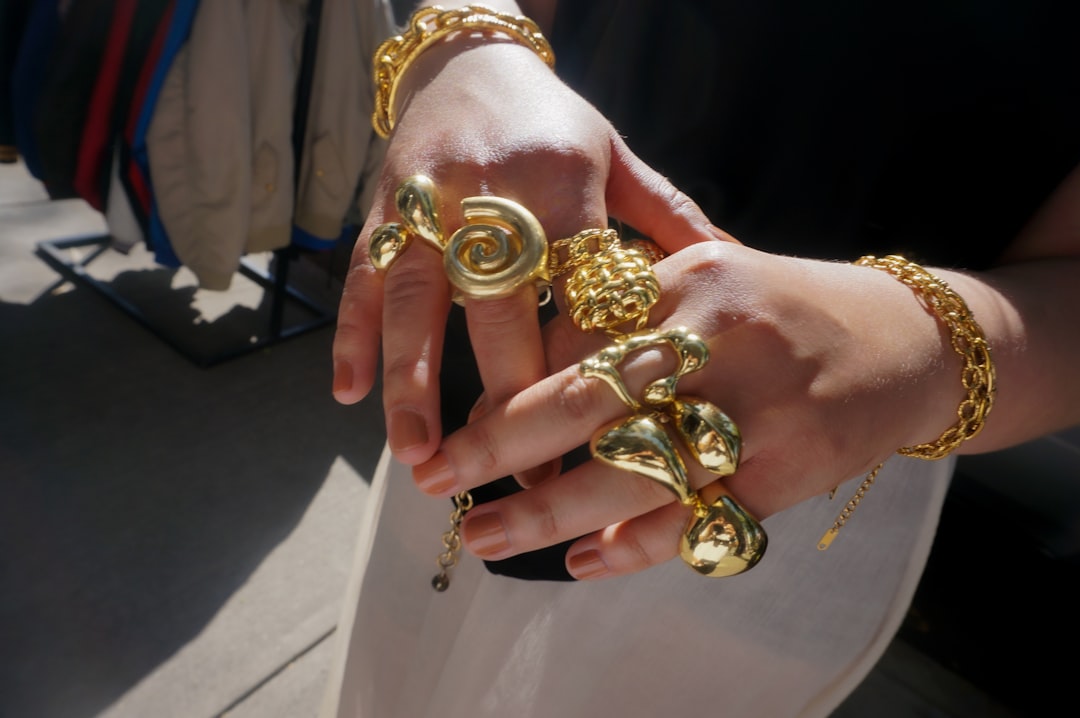
Jewelry’s role extends well beyond utility—it communicates personal identity. As consumers increasingly want products that reflect their uniqueness, designers are drawing heavily from personalization technologies. With 3D printing, NFC tags, and AI-powered design tools, it has become easy to mass-customize pieces.
Some innovations include:
- NFC-enabled rings: These allow wearers to share contact information, social profiles, or secure authentication via a simple tap.
- DNA Jewelry: Companies now offer to preserve genetic material—like hair or skin cells—to create highly personalized pendants or rings containing part of your essence, both literally and symbolically.
- Smart Engraving: Laser technology ties in with AI to create intricate engravings that respond to mood data or facial recognition, resulting in a dynamic and evolving daily design.
Personalized tech jewelry is making individuality not just an aesthetic asset but a technological reality too.
The Intersection of Luxury and Innovation
High-end designers and tech firms are increasingly finding common ground. In the past, technology was aligned more with mass-market solutions, while luxury remained the domain of handcrafted uniqueness. Today, those boundaries are breaking down.
Examples include:
- Louis Vuitton’s Horizon Light Up ring – This dazzling piece combines premium metals with LED lighting and connectivity functions, emphasizing that luxury can also mean state-of-the-art.
- Cartier’s Exploration into AR: Cartier has begun using augmented reality to allow potential buyers to “try on” jewelry using smartphone apps, blending high design with immersive tech.
- TAG Heuer Smartwatches: Merging Swiss craftsmanship with Google’s Wear OS, these watches add a luxury sheen to functional wearables.
This blending of sophistication and innovation suggests that technology is no longer just an added feature—it’s an integral part of design thinking in luxury fashion.
Environmental Responsibility and Sustainable Tech-Jewelry
With increased global awareness of sustainability, jewelry that incorporates ethical practices and smart features is gaining traction. Consumers are seeking pieces that are both eco-conscious and technologically enabled. Brands are responding by using recycled metals, lab-grown diamonds, and even e-waste to create intelligent adornments.
Notable trends include:
- Solar-Powered Accessories: Brooches and pins that generate their own energy via solar cells, encouraging off-grid functionality.
- Upcycled Smart Components: Designers like Paola Antonelli have begun integrating recycled sensors and circuits sourced from disposed tech devices into their collections.
- Blockchain for Transparency: Smart jewelry can now include traceable blockchain tags that verify the origin of materials used, increasing trust and reducing the impact of sourcing.
This adds a new utilitarian dimension to ethical fashion, where transparency and awareness are as important as style and sophistication.
How the Fashion Industry Adapts
The fashion world, traditionally centered around seasonal trends, is now being compelled to think long-term due to the growing role of tech. Big data, predictive intelligence, and wearable feedback loops are beginning to inform design cycles.
Some key shifts include:
- Feedback Loop Integration: Designers gather real-time data from smart pieces to adjust future models or suggest wardrobe changes.
- On-Demand Custom Design: Smart jewelry platforms now take live health or mood indicators to recommend new accessories or colors.
- Fashion as Software: With programmable color schemes or dynamic material behavior (like heat-sensitive color shifts), jewelry can now upgrade like apps.
This leads to a future where fashion is not static but alive, responsive, and part of an ongoing digital conversation with the wearer.
The Road Ahead: Challenges and Opportunities
Despite its promise, merging jewelry with tech comes with challenges:
- Durability: Combining delicate gemstones with circuits and batteries can compromise integrity over time unless well-designed.
- Data Privacy: As smart rings monitor your vitals and store private data, questions arise about security and consent.
- Aesthetic-Functional Balance: Users want beauty without sacrificing practical utility—something that relies on tight designer-engineer collaborations.
Nevertheless, with advances in miniaturization, materials engineering, and UI/UX design, the opportunities far outweigh these hurdles. The sector’s blend of emotional resonance and technical innovation make it one of the most exciting frontiers in fashion.
Conclusion
The integration of jewelry and technology is not merely a trend—it’s a paradigm shift in how we express ourselves and interact with the world. From health metrics to personalization, from luxury to sustainability, this intersection is redefining the very nature of personal style. As technology continues to infuse itself into the fabrics of our lives—literally and figuratively—the jewelry we wear will not only reflect who we are but enhance who we can become.
As we step into this new era, it’s clear that jewelry is evolving from a static accessory into a dynamic interface. Beauty, utility, and identity are no longer separate domains—they’re converging into a single, seamless expression of human possibility.


Leave a Reply